


No articles in this category yet
We're working on new guides for this topic. Check back soon, or browse all posts to see everything we've published.

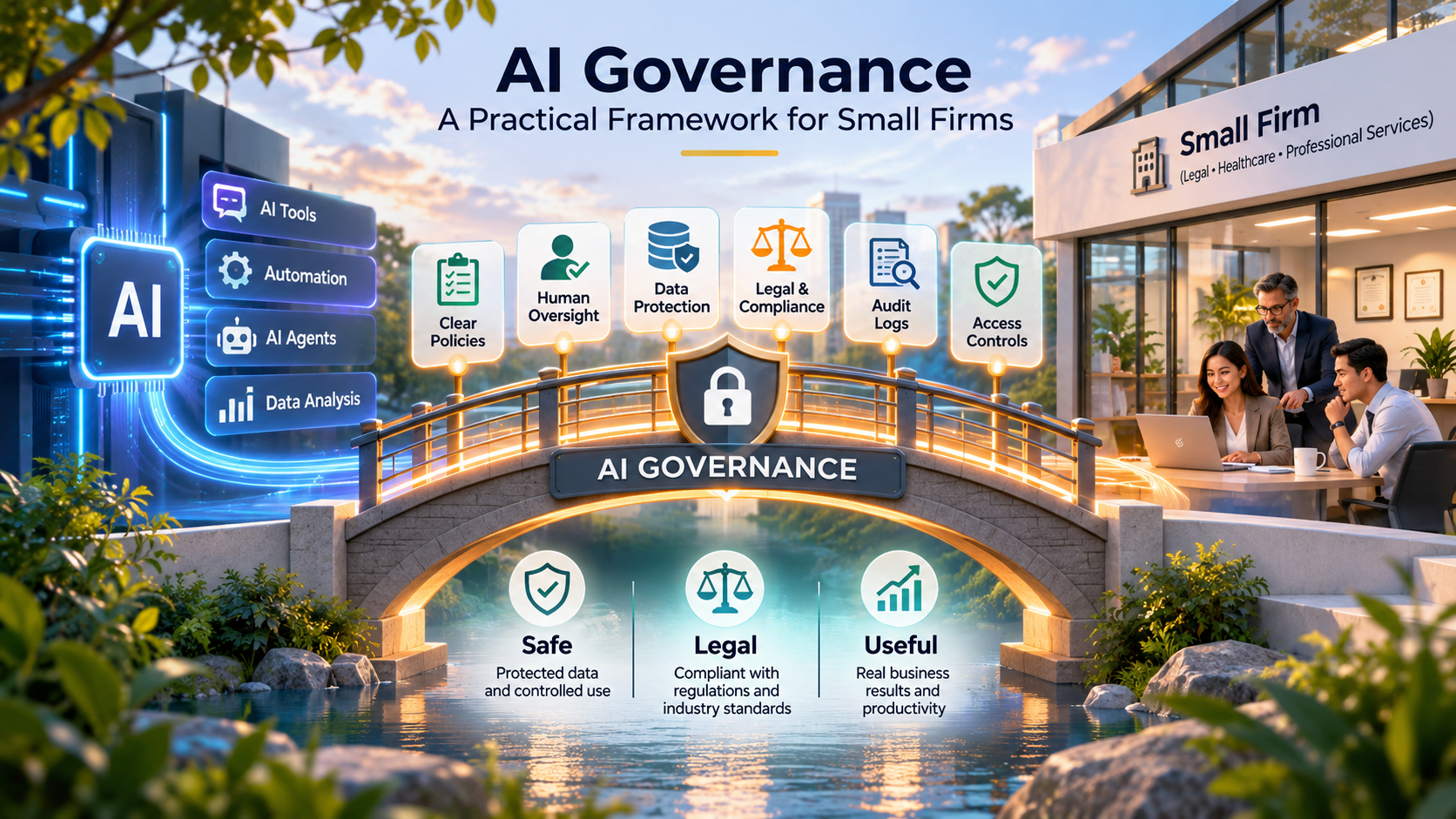
AI governance is how a business controls the way it uses AI. It covers which tools staff can use, what data goes into them, who checks the output and how you prove all of that to clients or regulators. Most guides on this topic speak to large enterprises. This one gives small and mid-sized firms a framework they can put in place in about 30 days.
AI governance is the system of policies, roles and controls that keeps AI use safe, legal and useful. In practice, it answers four questions:
Governance also differs from IT security in one key way. Security protects systems. Governance decides how people use AI inside those systems, which makes it a business decision as much as a technical one.
In most firms, employees already use AI, whether you approved it or not. That gap creates "shadow AI," which means staff paste work data into personal tools with no oversight.
The numbers show the risk. According to IBM's Cost of a Data Breach report, 68% of breached organizations in the 2026 study lacked AI governance, up from 63% the year before. In addition, 92% of AI-related breaches involved no proper AI access controls.
For law firms and medical practices, the stakes climb even higher:
As a result, governance has shifted from a nice-to-have into a sales and risk requirement.
You can skip a 100-page program. Instead, build these five parts and keep them current.
Start with what already exists. First, survey your team, review browser extensions and check software subscriptions. Then list each tool, its users, its data access and its vendor terms. Most firms find two to three times more AI tools than they expected.
Next, put the rules in writing. For example, a good policy names approved tools, lists banned uses and explains how staff should handle client or patient data. It also sets disclosure rules, such as when to tell a client that AI helped draft a document. Keep it short enough that people actually read it.
Then, move approved tools onto business accounts with single sign-on. Turn off model training on your data where the vendor allows it, and set retention periods. Finally, remove access when staff leave.
AI drafts quickly and makes confident mistakes. Therefore, define which outputs always need human review. For example, legal filings, clinical notes, financial figures and client emails should pass through a named reviewer before they go out.
Finally, check that the rules work. Each quarter, review usage logs, incidents and exceptions, then update the policy. Short audits beat annual overhauls because tools and vendor terms change fast.

AI risk management is the part of governance that identifies what could go wrong and how likely it is. For a small firm, focus on the risks below.
The NIST AI Risk Management Framework organizes this work into four functions: Govern, Map, Measure and Manage. It is voluntary, free and a strong starting point for any size of business.
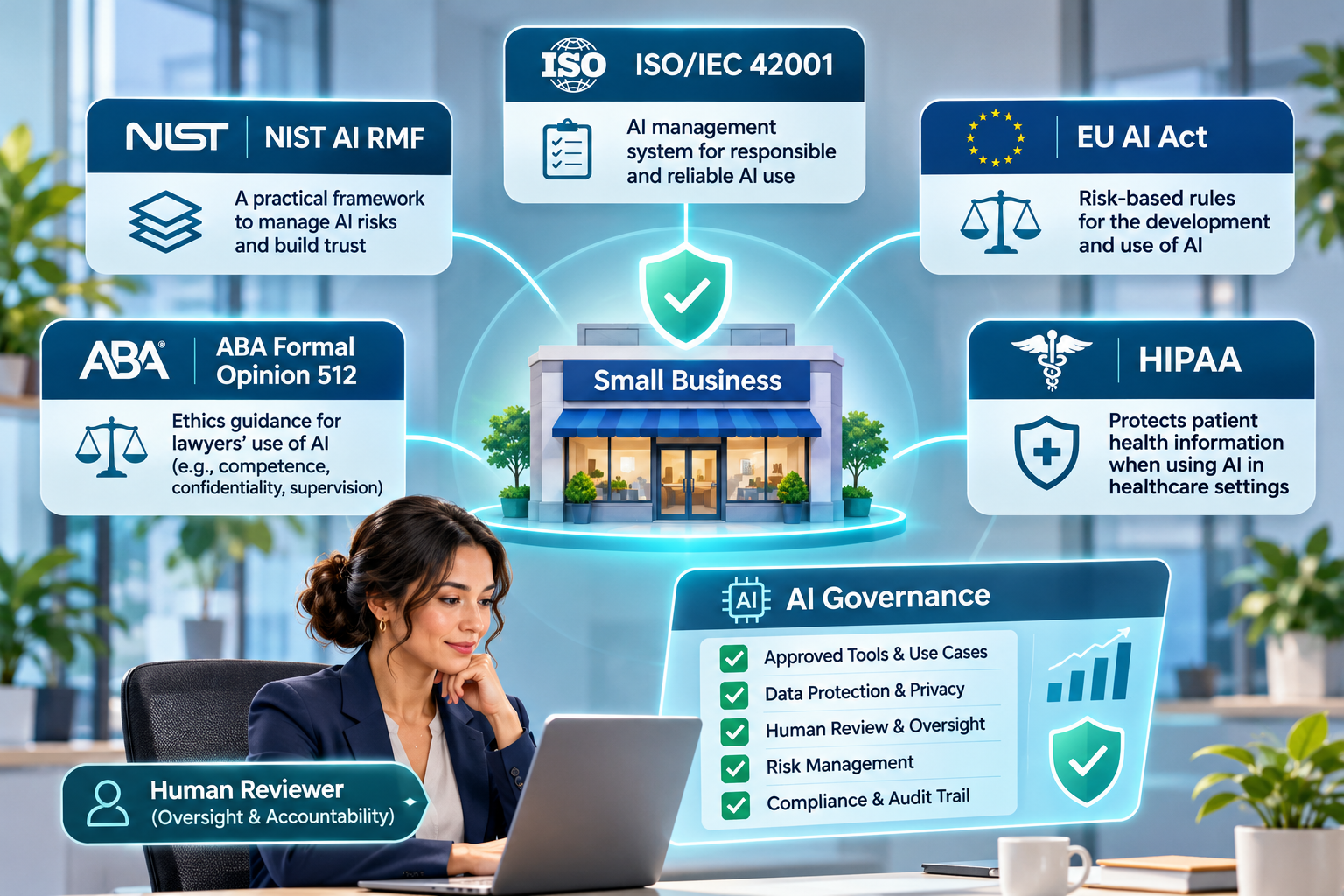
You do not need to pick just one. Most small firms borrow structure from a recognized framework and then add industry rules.
Governance fails when everyone shares it and nobody owns it. In a small firm, the owner usually lacks the time, and IT staff often lack the policy background. That leaves three options:
An AI Compliance and Governance Manager from AI Virtual works as a full-time member of your team. AI Virtual's specialists hold credentials such as the IAPP AIGP and ISO/IEC 42001 Lead Implementer, which you can review on the certifications page.
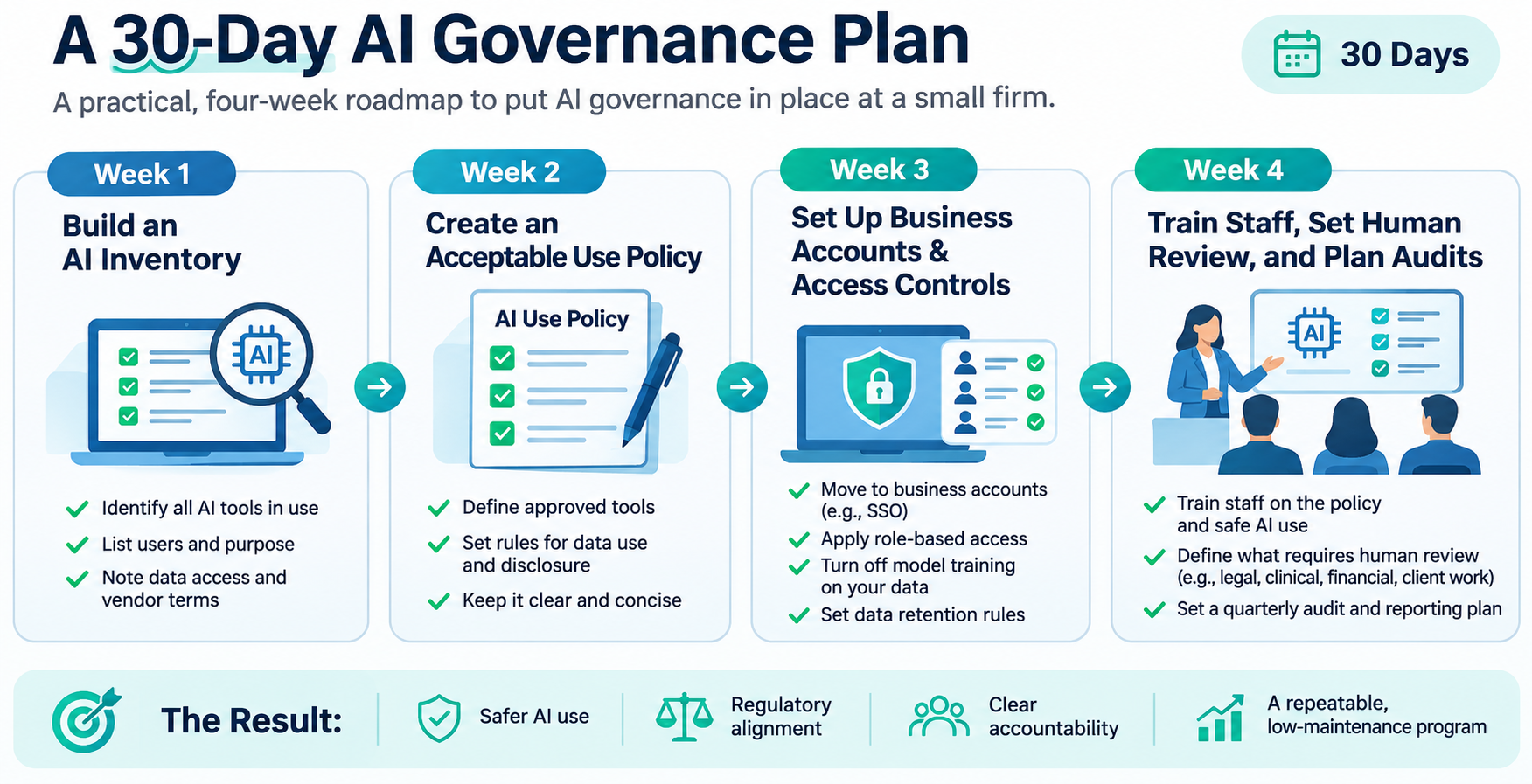
Use this plan to move from zero to a working framework.
If you have not assessed your readiness yet, start with our AI readiness assessment checklist.
AI Virtual matches businesses with pre-vetted AI specialists who work as dedicated, full-time members of your team.
Book a free consultation to see how a governance specialist fits your firm.
AI governance is the set of rules, owners and checks that controls how a business uses AI. It covers approved tools, data handling, human review and audits.
It reduces data leaks, inaccurate output and compliance violations. IBM's 2026 breach research found that most organizations hit by AI-related breaches lacked proper AI access controls.
An AI governance framework is a structured approach to managing AI risk. Popular examples include the NIST AI Risk Management Framework and the ISO/IEC 42001 standard.
Yes. If employees use AI tools with client, patient or financial data, you need basic rules, an approved tool list and someone who checks that people follow them.
Leadership sets direction, but one named person should run it day to day. Many firms assign this to a dedicated AI compliance and governance manager.
A small firm can build a working framework in about 30 days. After that, plan for monthly inventory updates and quarterly audits.
Get matched with an AI specialist who identifies opportunities and implements solutions that improve your operations.
We're working on new guides for this topic. Check back soon, or browse all posts to see everything we've published.